


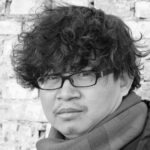





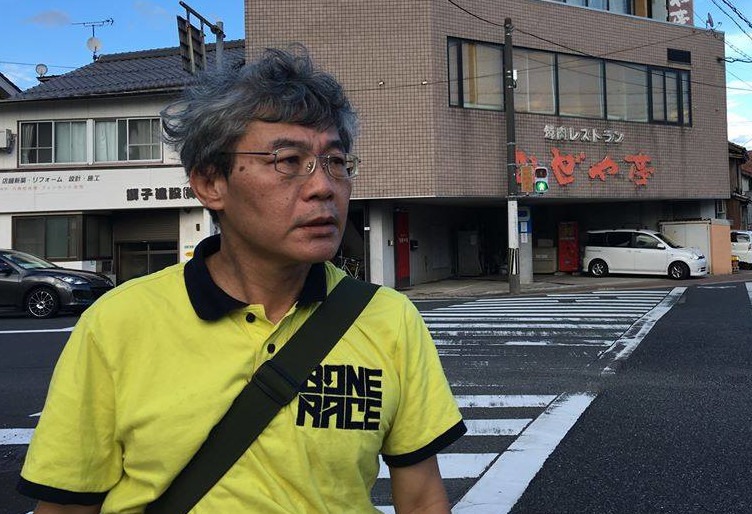
Prof. Tzemin Ition Tsai is a retired professor of literature from China (Taiwan). For him, however, “retirement” is less a farewell to the classroom than a step out of the clockwork of academia—an official extension of employment by language itself, a return to work upon the page. It is his way of giving his years back to literature, and of returning himself to the wider, quieter world of human life. He thus turned to life as an independent writer, setting aside the pen once used to grade students’ papers and taking it up instead to observe landscapes more closely, to listen more carefully to the textures of human feeling, and to trace those glimmers and shadows that quietly take root in daily life, branch outward, and eventually grow into stories.
His writing has long been drawn to the natural world and to family bonds, because he has always believed that the deepest roots of literature are rarely found in noisy places, but rather in what seems ordinary and yet has the greatest power to pierce the heart. The way mountain wind brushes past the corner of a house, the way a river seems to remember parting, the way morning mist settles over a village, the unspoken but enduring ties that remain among family members, these are the scenes to which his writing returns again and again.
In his fiction and essays, there is often the scent of the land, and also the lingering warmth of human feeling. At times he writes of desolation, yet he still hopes to leave a little light within it; at times he writes of sorrow, yet he does not wish sorrow to be only a fall into darkness. He has always hoped that words can be more than vessels of rhetoric, that they may also become a way to hold memory, illuminate life, and deepen our understanding of others. When he writes with gravity, he tries not to become heavy-handed; when he writes lightly, he tries not to become shallow. As for poetry, it feels more like a small lamp left beside the longer arc of narrative, allowing emotions that could not be fully spoken in time to go on glowing softly in the stillness of night.
一、〈The Well’s Mouth〉
When the bell-sound falls,
thin frost begins to gather at the well’s mouth.
The rope wears slowly against the stone rim,
while the years, inch by inch, take the salt from the lines of the palm.
I once believed time moved forward,
like a road being opened by wheels;
only later did I learn it moves downward,
toward the dark, toward echoes sunk in water,
toward every face that will in time resemble one’s own.
There is no oracle at the bottom of the well,
only water long denied the light,
keeping the reflection of stars and rotting leaves together.
To grow old is not for the flame to go out,
but for certain weights, as the bucket rises, never again to be fully drawn.
I bent down and saw another man,
and learned to know myself by cold water.
二、〈The Scale Pan〉
After the market has closed,
an old scale still hangs in the dark.
Its iron hook dangles there,
a fragment of unclaimed moon.
By day it weighs fish, salt, and green onions,
but by night it measures the human heart for the air itself.
Greed glimmers on the scale pan, light as paper,
yet when it drops, it is heavier than lead.
A bunch of vegetables still clotted with soil can suddenly quiet the palm.
A life is no more than a swaying between two ends: what cannot be had, and what cannot be let go.
The brief trembling of the needle is what most resembles fate.
True subtraction is not kept in ledgers,
but in the willingness to lay down, one by one,
name, defense, and victory back into the dust.
三、〈The Cracked Vessel〉
The body is, in truth, a cracked vessel,
once the firing goes a little too far, it begins to answer with echoes.
In youth I struck it, believing brightness itself was eternity.
Until illness rose from the depths, like a cold nail,
driven one by one into the seams between bone and night.
The white of the hospital is not white,
but an emptiness that presses one back into one’s original form.
The drip falls, as though eaves in winter were counting down a remnant life.
All strength is only a temporary lodging; fragility is the true ordeal.
To take each pain as testimony that the vessel has not yet shattered entirely,
and with what is broken, to hold a little warmth.
四、〈Beneath the Stove〉
The stove-fire crouches low,
a beast long stripped of speech.
As Mother rinses rice,
her knuckles wash small dawn-light out of the water.
Father chops silence into pieces of fish,
rubbing salt into the seams of the day.
Home is not an uncracked vessel,
but the same table still shared after the breaking.
Those dishes passed back and forth by chopsticks are not food,
but absolutions each has taken too long to learn.
Steam rises from the soup,
briefly veiling the old wounds in the eyes.
What reunion means is this:
on a night of wind and rain,
someone still remembers to leave you a bowl and a pair of chopsticks.
五、〈Vertical Line〉
The city grows upward,
setting people layer by layer into glass.
Elevator doors open and close
like lips rehearsing the indifference of fate.
The crowd stands shoulder to shoulder,
each clutching that single floor against the chest.
The ascent is so swift,
so swift the heart cannot be heard falling out of step.
Business cards grow thicker and thicker,
while shadows at night grow thinner and thinner.
At great heights no answers are born,
only more reflections.
Many, having arrived,
lose even the place where they might stand.
So true height,
it turns out, is not in looking down,
but in the midst of the crush,
still being willing to step half a pace back for another’s way through.
六、〈Crossing the Sea〉
When the sea lies calm,
illusion breeds most easily.
The prow cleaves the blue,
like a sentence too certain of itself.
Once the ridges of the waves rise,
a person’s name at once grows light,
light as salt,
enough to dissolve a lifetime of boasting.
The compass is not the answer,
nor the stars;
what truly brings one back to shore is often reverence,
unbroken within fear.
To set sail is like lending one’s bones to the wind.
To return is not victory either,
but only to be given back by the sea for a while.
七、〈Root System〉
A tree stands only by virtue of what cannot be seen.
Roots write slowly in the earth, translating darkness into sap.
Branches and leaves are charged with clamor; the rings bear witness only within.
So it is with us:
what may be praised is for the most part what grows on the outside;
what truly bears the weight of a life is often buried where speech is ashamed to go.
After many years away from home, one learns the accents of elsewhere,
yet on some damp morning, by a gust from the old land,
is called back to the true name hidden in the bones.


